

Solar pool heating is an eco-friendly and cost-effective solution for those living in areas with plenty of sunlight, offering long-term heating cost savings. These pool heating panels are a popular choice for pool owners seeking energy-efficient ways to maintain warm water temperatures. The best solar pool heater can be a worthwhile investment depending on your goals, location, and pool usage. Here’s an analysis of the benefits and considerations of solar panels for pools to help determine if they are worth it:
Benefits of solar pool heating
- Energy efficiency: Solar panels use the sun’s energy, making them an eco-friendly, renewable energy source with low operating costs after installation.
- Cost savings: Over time, solar pool heating can significantly reduce the cost of the electricity or gas needed to heat the pool.
- Extended swimming season: Solar heating helps maintain comfortable pool temperatures, extending your swimming season even in cooler months.
- Low maintenance: Solar panels are generally low-maintenance and have a long lifespan, often lasting 15–20 years or more.
Considerations for solar pool heating
- Upfront costs: Installation can be expensive, depending on the size of your pool and the complexity of the installation. However, it can pay off over time with savings on utility bills.
- Climate: Solar pool heating works best in sunny climates where the sun is a consistent source of energy. It may not be as effective in areas with frequent cloudy weather or long winters.
- Space requirements: Solar panels require significant roof or ground space for installation, which might not be available in all properties.
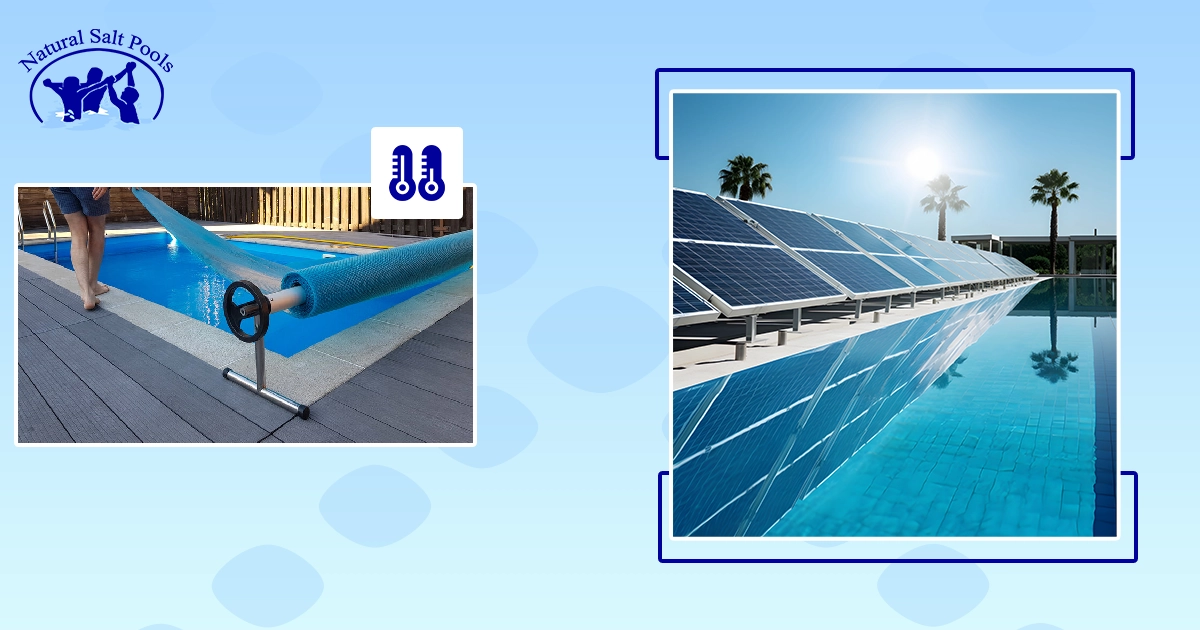
Understanding Factors that Influence Solar Pool Heating Efficiency.
Solar pool heating efficiency depends on several factors that affect how effectively the system can capture and transfer solar energy to heat your pool water. Here are key factors for the performance of solar pool heating:
- Geographic location and climate: The efficiency of solar pool heating largely depends on the amount of sunlight available in your region. Locations with long sunny seasons and minimal cloud cover maximize solar energy capture, while areas with colder climates or frequent overcast skies may require additional heating solutions to supplement solar energy.
- Panel orientation and tilt: Solar panels should be oriented to receive maximum sun exposure. In the Northern Hemisphere, a south-facing direction with a tilt angle close to your geographic latitude optimizes performance. Proper orientation and tilt ensure that the panels collect solar energy throughout the day.
- Pool size and volume: The size and volume of your pool determine how much energy is needed to maintain a comfortable water temperature. Larger pools require more heat, which translates to a greater number of solar panels or a larger collector area to achieve efficient heating.
- System design and plumbing: Efficient water flow through the solar collectors is essential for effective heat transfer. Properly insulated pipes reduce heat loss, ensuring more solar energy reaches the pool. A well-designed system optimizes performance by balancing flow rate and pressure.
- Use of pool covers: A solar pool cover prevents heat loss during the night and on cooler days, significantly improving solar heating efficiency. Covers act as insulation, reducing evaporation and heat dissipation, which allows the solar system to maintain a consistent water temperature with less energy loss.
- Wind and shade: Wind can cool solar panels and reduce their efficiency, while shading from trees, buildings, or other obstructions limits sun exposure. Positioning panels in open, sheltered areas or using wind barriers can help prevent heat loss and maximize solar energy absorption.
- Water temperature goals: The amount of heating required depends on the desired water temperature. Higher temperature goals demand more solar energy, necessitating a larger solar heating system or supplemental heating, especially in cooler climates or for year-round swimming.
Leave a Reply