
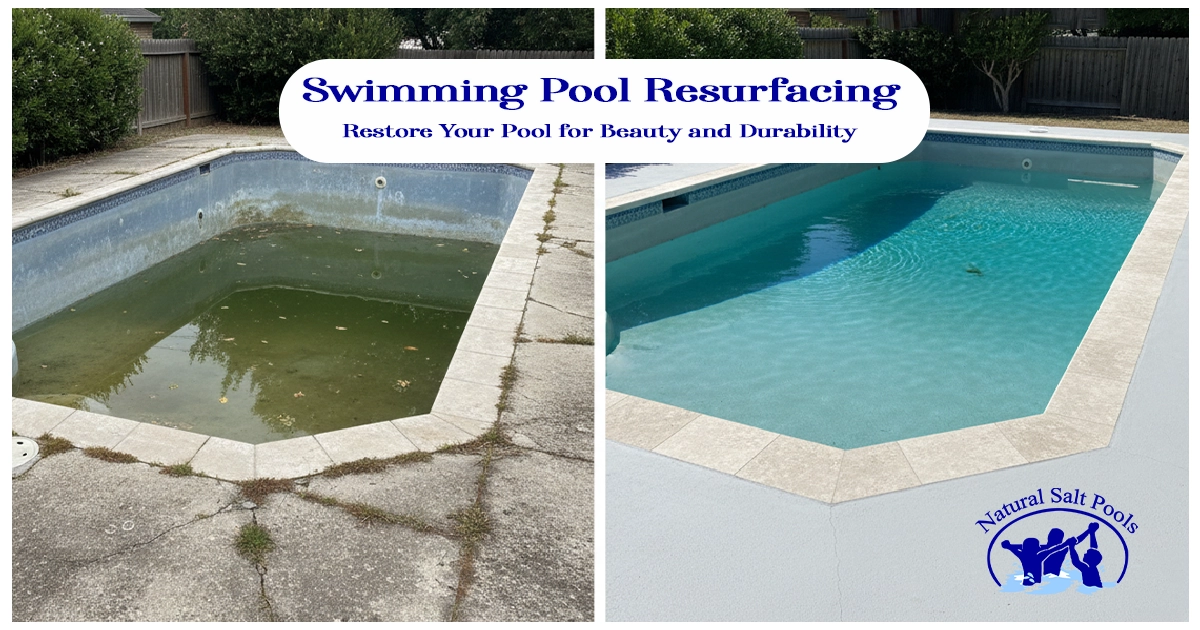
Your swimming pool is more than just a water feature—it’s the heart of your backyard, a place where memories are made and relaxation happens. Over time, even the best-maintained pools show signs of wear: faded surfaces, rough textures, cracks, or stubborn stains. That’s where swimming pool resurfacing comes in. This process revitalizes your pool’s appearance, strengthens its structure, and enhances safety, giving it a fresh, durable finish. In this guide, we’ll explore the materials, steps, and maintenance tips you need to know to keep your pool looking and performing its best, along with professional insights from experts at Natural Salt Pools Hawaii
What Is Pool Resurfacing and Why It Matters
Pool resurfacing involves removing or renewing the worn surface of your pool and replacing it with a durable finish. Unlike simple patch repairs, resurfacing restores the pool’s “skin,” making it smooth, visually appealing, and safe for swimmers. Over time, water, sun exposure, and pool chemicals naturally degrade plaster, pebble, or tile surfaces. A worn surface can lead to discomfort while swimming, persistent staining, and structural weaknesses. Resurfacing addresses these issues while enhancing the longevity and overall performance of your pool. Think of it as giving your pool a complete makeover—inside and out.
Signs Your Pool Needs Resurfacing
Not every scratch or discoloration requires a full resurface, but there are clear indicators:
- Cracks and Chips: Frequent or large cracks that reappear after patching suggest the pool surface is aging.
- Rough Texture: A rough, uneven surface can be harsh on bare feet and swimsuits.
- Persistent Stains: Marks and discoloration that don’t come off with regular cleaning indicate surface porosity.
- Fading or Discoloration: A dull, chalky, or uneven color shows the surface is worn out.
Spotting these signs early allows you to schedule resurfacing before small problems turn into major headaches.
Popular Resurfacing Materials
Choosing the right material is crucial for aesthetics, durability, and ease of maintenance. Here’s a look at some of the most common options:
1. Plaster – The Classic Choice
Plaster is smooth, clean, and widely used for pool resurfacing. It creates a classic look and is easy to apply. While it requires routine chemical maintenance to avoid staining and erosion, plaster remains a reliable choice for many homeowners seeking a smooth, elegant finish.
2. Aggregate Finishes – Pebble, Quartz, or Glass
Aggregate finishes combine cement with pebbles, quartz, or glass beads, producing texture, color, and exceptional durability. This finish offers better resistance to stains and rough patches while providing a more luxurious, high-end look. It also enhances safety, as the textured surface offers grip underfoot.
3. Fiberglass and Gelcoat
Fiberglass coatings are non-porous, smooth, and resistant to chemical damage. They last longer than standard plaster and are easier to maintain, making them ideal for homeowners seeking longevity with minimal upkeep. Gelcoat provides a similar effect, offering a glossy, waterproof finish.
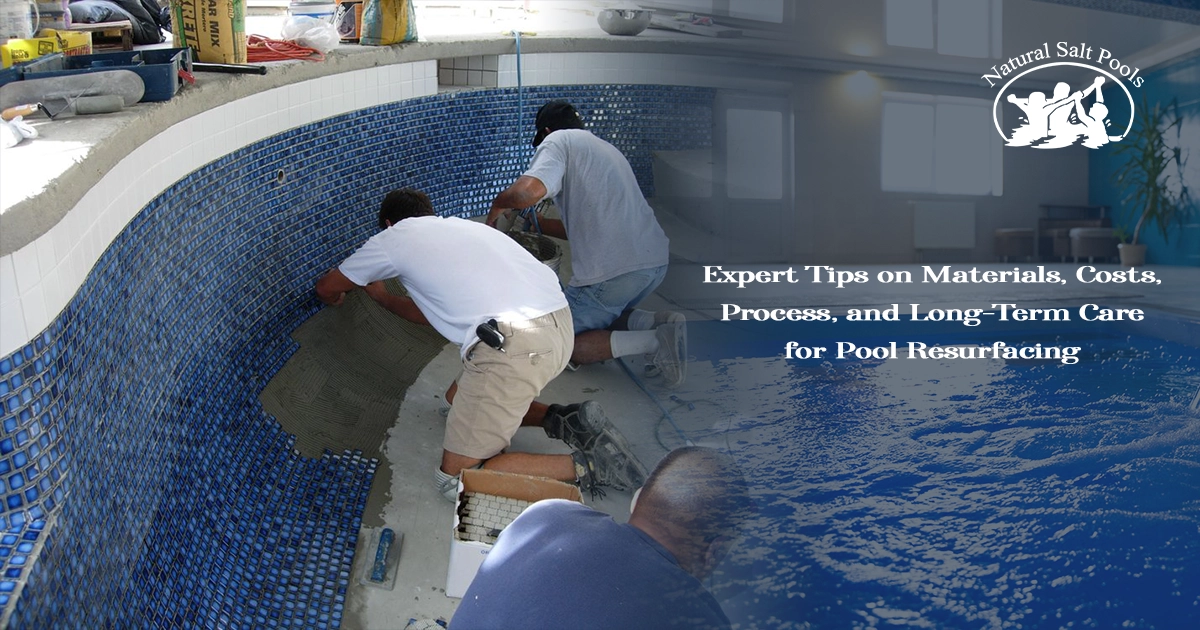
4. Tile Finishes – Premium and Decorative
Tiles bring elegance, customization, and unmatched durability. They are often used along the waterline for accents or as a complete pool surface. Tiles resist staining, hold color well, and can last decades when properly installed. Their aesthetic flexibility allows you to create a signature look for your backyard oasis.
The Resurfacing Process – Step by Step
Understanding the resurfacing workflow helps you plan efficiently:
- Drain and Inspect: The pool is emptied and examined for cracks, leaks, and weak spots.
- Surface Preparation: Old finishes are removed or prepared to ensure proper adhesion of the new material.
- Application: The chosen finish is applied systematically, typically starting from the deep end and moving to the shallow end.
- Curing: The new surface must set properly before refilling, ensuring structural integrity.
- Refill and Water Balance: The pool is filled, and chemical levels are adjusted to protect the new surface.
A professional resurfacing team ensures each step is completed correctly, maximizing the lifespan of your pool.
Long-Term Care After Resurfacing
A freshly resurfaced pool requires careful maintenance to stay beautiful and functional:
- Maintain Water Chemistry: Balanced pH and chlorine levels prevent surface etching and staining.
- Regular Cleaning: Skim debris, brush surfaces, and maintain filters to prolong surface quality.
- Periodic Inspections: Regularly check for small cracks, rough patches, or discoloration to address issues before they escalate.
Professional guidance from companies like Natural Salt Pools can ensure your pool stays in top condition, maximizing both beauty and durability.
Enhancing Your Pool’s Longevity
To keep your resurfaced pool looking pristine:
- Use pool covers when the pool is not in use to protect from debris and sunlight.
- Avoid harsh chemicals or excessive shock treatments that can erode finishes.
- Schedule routine professional checkups to detect early wear and tear.
Combining careful maintenance with high-quality resurfacing materials ensures your pool remains the centerpiece of your backyard for years to come.
Swimming pool resurfacing is more than cosmetic—it’s an essential investment in your pool’s safety, functionality, and visual appeal. By choosing the right material, understanding the process, and committing to ongoing maintenance, your pool can regain its original splendor and enjoy a longer lifespan. Whether you prefer smooth plaster, luxurious aggregate, sleek fiberglass, or stylish tiles, resurfacing transforms your pool into a welcoming retreat that enhances your outdoor living space.
Transform your pool today! Contact Natural Salt Pools to explore expert resurfacing services and schedule your consultation.
Leave a Reply