

Understanding pool chemistry is crucial for maintaining clear and safe water in your swimming pool. The manufacturer has approved water treatment solutions to ensure water quality and extend the lifespan of pool chemicals and equipment for the swimming season. Here’s a breakdown of the key components:
- Chlorine: Chlorine is the primary sanitizer used in pools to kill bacteria and algae. It comes in various forms, such as liquid, granular, or tablet. The ideal chlorine level for a pool is typically between 1-3 parts per million (ppm).
- pH level: pH level measures how acidic or basic the water is. The optimal pH level for pool water is between 7.2 and 7.6. If the pH is too low, the water can be corrosive to pool equipment and irritating to swimmers’ skin and eyes. If it’s too high, it can lead to scale formation and reduced chlorine effectiveness.
- Total Alkalinity (TA): Total alkalinity helps buffer pH changes, stabilizing the water. The recommended range for total alkalinity is typically between 80-120 ppm. If the TA is too low, pH levels can fluctuate rapidly. If it’s too high, the water may become cloudy, and scaling can occur.
- Calcium hardness: It refers to the concentration of calcium ions in the water. The ideal range for calcium hardness is usually between 200-400 ppm. Low calcium hardness can lead to corrosion of pool surfaces and equipment, while high levels can cause scale formation.
- Cyanuric Acid (CYA): Also known as a stabilizer or conditioner, cyanuric acid helps protect chlorine from degradation by sunlight. The recommended CYA level is typically between 30-50 ppm for outdoor pools using chlorine. However, too much CYA can lead to chlorine ineffectiveness, a condition known as “chlorine lock.”
- Shock treatment: Occasionally, pools may require “shocking” to remove organic contaminants, such as sweat, urine, and sunscreen, that can build up over time. Shock treatments involve adding a highly concentrated dose of chlorine to the pool water to kill bacteria and algae.
- Regular testing: Regularly testing the pool water is essential for maintaining proper chemical balance. Test kits are available to measure chlorine, pH, alkalinity, and other parameters. Testing should be done at least once a week, with more frequent testing during periods of heavy use or extreme weather.
- Filtration and circulation: Proper filtration and circulation are essential for keeping pool water clean and clear. The pool pump and filter should be run for a sufficient amount of time each day to ensure all the water is circulated and filtered.
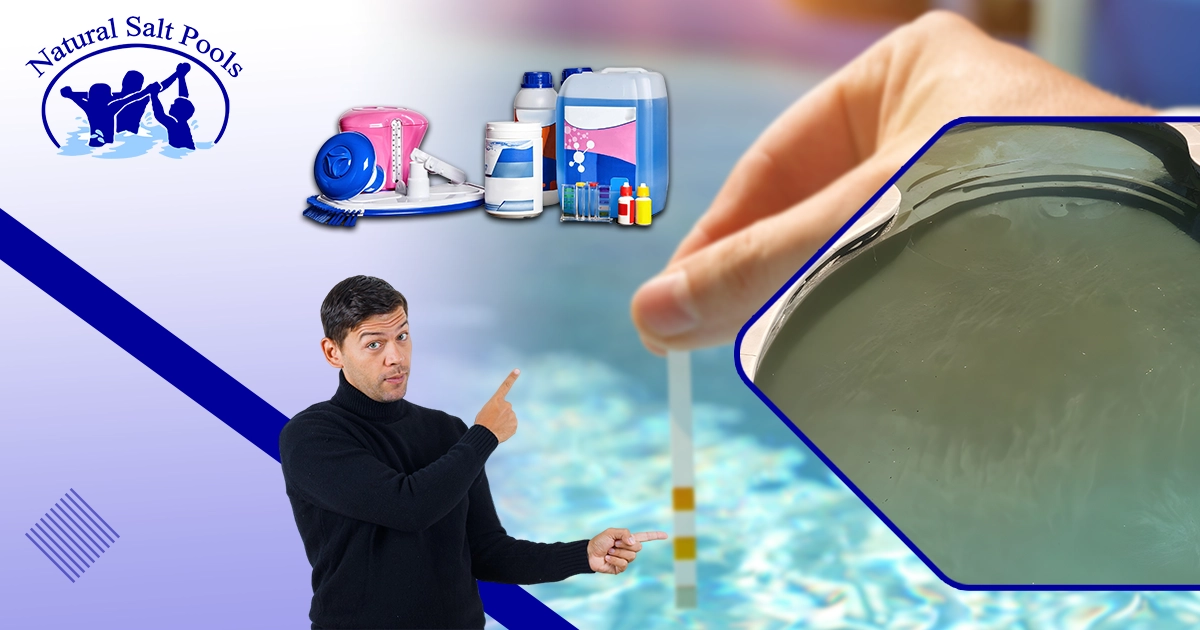
Troubleshooting Common Pool Chemistry Issues.
Troubleshooting common pool water problems involves identifying and resolving problems related to water balance, sanitizer levels, and other chemical factors that can affect the safety, appearance, and comfort of pool water. Here are some common pool chemistry issues and their solutions:
- Algae growth: Algae growth can cause green, cloudy water and slippery surfaces. Algae prevention involves maintaining proper chlorine levels, ensuring adequate circulation, and using algaecide as needed. If algae are present, shock the pool and brush the affected areas thoroughly, then vacuum the debris.
- High pH levels: High pH levels in a pool can lead to several issues, such as cloudy water, scaling on pool surfaces and equipment, and reduced effectiveness of chlorine. To address high pH, add a pH reducer, such as muriatic acid or sodium bisulfate, to bring the pH back to the ideal range of 7.2–7.8. Regular testing and adjustments help maintain balanced water chemistry.
- Low pH levels: Low pH levels can cause corrosion of metal components, skin and eye irritation, and damage pool surfaces. To correct a low pH, add a pH increaser, like sodium carbonate (soda ash), to raise the pH to the appropriate range. Consistent monitoring ensures the pH stays within the optimal range.
- High alkalinity: High alkalinity can make it difficult to adjust pH levels and can lead to cloudy water and scaling. To reduce alkalinity, add muriatic acid or sodium bisulfate gradually while continuously circulating the water. Lowering alkalinity requires the careful addition of chemicals to avoid overly reducing pH.
- Low alkalinity: Low alkalinity can result in pH fluctuations, leading to corrosive water that can damage pool surfaces and equipment. To raise alkalinity, use an alkalinity increaser, typically sodium bicarbonate (baking soda). This helps stabilize pH and protect pool components.
- High calcium hardness: High calcium hardness causes scaling on pool surfaces and equipment, leading to rough surfaces and potential blockages in the filtration system. To manage high calcium levels, partially drain and refill the pool with water containing lower calcium levels. Additionally, using a scale inhibitor can help prevent calcium deposits.
- Low calcium hardness: Low calcium hardness makes the water corrosive, potentially damaging pool surfaces, grout, and metal components. To increase calcium hardness, add calcium chloride to the pool. Aim for a calcium hardness level between 200-400 ppm for balanced water.
Leave a Reply