

When choosing between a heat pump and solar pool heating, several factors come into play, including pool heating cost, efficiency, environmental impact, and climate suitability. Solar pool heating and heat pump systems can be an easy option to maximize efficiency and savings for a long-term, eco-friendly solution living in a sunny area. Here’s a comparison to help you decide heat pump vs. solar pool heating:
Heat Pump Pool Heating
Heat pumps use electric pool heating to transfer heat from the air to the pool water. Heat pump pool heating is the best for those who want consistent heating, faster temperature increases, and extended swimming seasons and are willing to pay higher operational costs. Here are the pros and cons of heat pump pool heating:
Pros:
- Efficiency: They are highly efficient, transferring heat from the air to the pool water.
- Consistency: They can maintain a consistent pool temperature regardless of weather conditions.
- Quick heating: They heat the pool more quickly compared to solar heaters.
- Extended season: Heat pumps can extend your swimming season by maintaining pool temperature even in cooler weather.
Cons:
- Cost: Higher upfront and operational costs compared to solar heaters.
- Energy consumption: They rely on electricity, which can increase energy bills.
- Environmental impact: Greater carbon footprint due to electricity usage unless paired with renewable energy sources.
Solar Pool Heating
Solar pool heating uses solar panels to collect and transfer heat from the sun to the pool water. Ideal for environmentally conscious users in sunny climates looking for low long-term costs and sustainable energy solutions. Here are the pros and cons of solar pool heating:
Pros:
- Low operating cost: After the initial installation, solar heaters have minimal operating costs.
- Environmentally friendly: Solar heaters use renewable energy, making them eco-friendly.
- Longevity: Solar systems often have a long lifespan, with minimal maintenance required.
- Savings: Significant savings on energy bills over time.
Cons:
- Weather dependent: Solar heaters rely on sunny weather, which can be less effective in cloudy or rainy climates.
- Slow heating: They typically heat the pool more slowly and may not be able to maintain desired temperatures consistently.
- Space requirement: Solar panels require a large surface area for installation, usually on the roof or a dedicated ground area.
Considerations
Here are some points to consider while choosing heat pump vs. solar pool heating:
- Climate: In sunny regions with mild winters, solar heating can be highly effective and economical. In areas with less consistent sunshine or colder climates, a heat pump might be more reliable.
- Budget: While solar heating has a higher initial cost, it can be more cost-effective in the long run. Heat pumps have lower upfront costs but higher ongoing electricity costs.
- Environmental impact: Solar heating is the greener option, reducing your carbon footprint significantly.
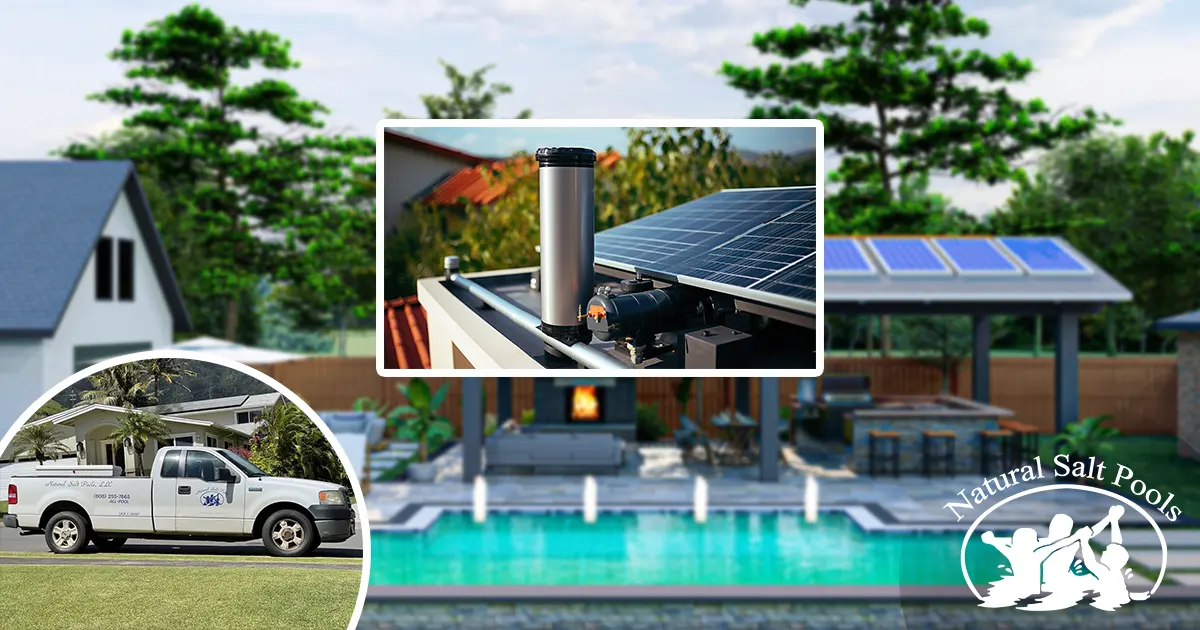
Solar pool heating service at Natural Salt Pool.
Natural Salt Pool offers comprehensive solar pool heating solutions to help you harness the power of the sun and keep your pool warm efficiently and sustainably. We offer top-tier solar pool heating solutions designed to provide eco-friendly and cost-effective warmth for your pool. Utilizing advanced solar technology, Natural Salt Pool ensures optimal heating performance, allowing you to enjoy extended swimming seasons with minimal operational costs. Their expert team handles everything from installation to maintenance, ensuring your system runs efficiently year-round. By choosing Natural Salt Pool Services, you invest in a sustainable heating solution that leverages renewable energy, reducing your carbon footprint while delivering consistent comfort.
Leave a Reply