
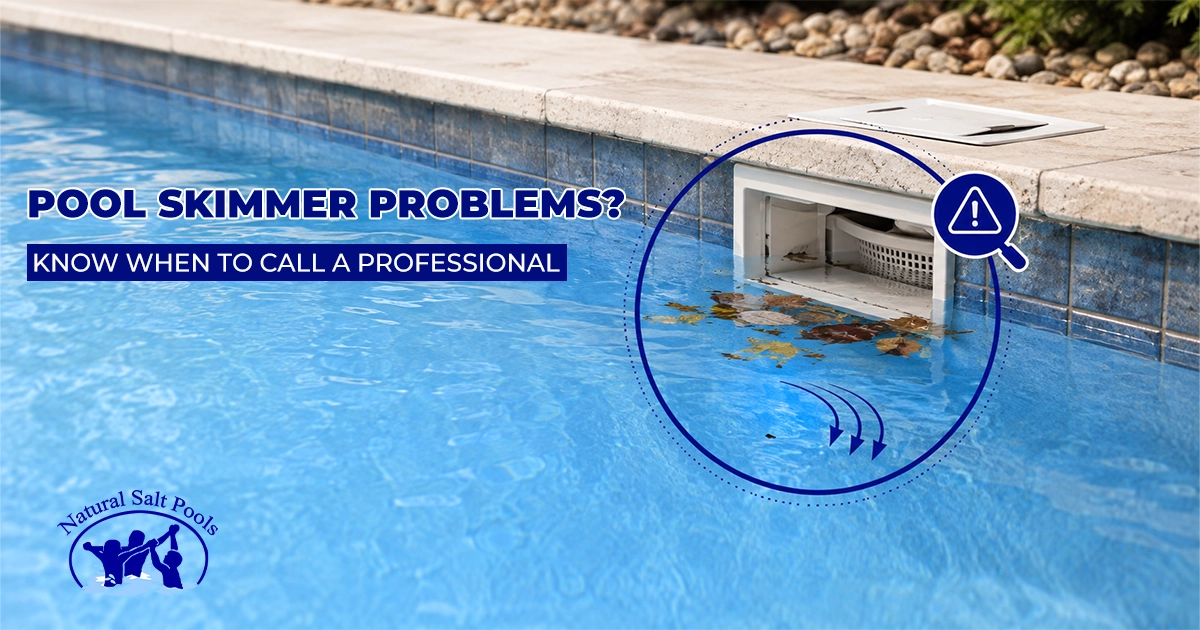
The pool skimmer is easy to overlook. It sits quietly at the edge of the pool, pulling in leaves, bugs, and surface debris before they ever get the chance to sink and cause bigger problems. Most owners barely think about it until the water starts looking a little off, or debris that should be gone within minutes is still floating around hours later.
By the time a skimmer problem becomes obvious, it has usually been building for a while. Catching the early warning signs can mean the difference between a quick, inexpensive fix and a much larger repair down the line.
This guide covers the most common pool skimmer problems, what they usually mean, what you can try on your own, and when it is time to call a professional.
What Does a Pool Skimmer Actually Do?
A pool skimmer pulls water from the surface of the pool through an opening in the pool wall, capturing leaves, insects, and floating debris in a removable basket before that water moves on to the filter and pump. It is one of the first lines of defense in keeping a pool clean, and when it stops working properly, debris and contaminants have a much easier time building up in the water.
Common Pool Skimmer Problems and What They Mean
Pool Skimmer Not Working (No Suction)
When a pool skimmer is not working and there is little or no suction, the cause is often a low water level, a clogged skimmer basket, or a blockage further down the suction line. Air leaks around the skimmer lid or fittings can also reduce suction significantly, even when the pump itself is running fine.
Skimmer Door or Flap Is Stuck or Missing
The small floating door inside the skimmer, sometimes called a weir, helps regulate water flow and prevents debris from floating back out once it has been captured. A stuck, warped, or missing door reduces skimming efficiency and can allow captured debris to escape back into the pool.
Cracked or Leaking Skimmer Housing
Cracks in the skimmer housing are usually caused by ground movement, freeze damage in colder climates, or general age related wear. Even a small crack can lead to water loss around the skimmer and, over time, can undermine the surrounding pool deck or structure if left unaddressed.
Water Level Too Low or Too High for the Skimmer
A skimmer needs the water level to sit roughly at the midpoint of its opening to function properly. Water that is too low causes the skimmer to pull in air instead of water, while water that is too high reduces its ability to draw in surface debris at all.
Skimmer Basket Fills Up Too Fast
A basket that fills up constantly, especially during a season with heavy leaf or debris fall, is often just a sign of a busy season rather than a mechanical problem. That said, a basket that fills unusually fast even in calm conditions can point to a cracked or missing basket, or debris entering from an unexpected source.
Warning Signs Before a Small Problem Gets Worse
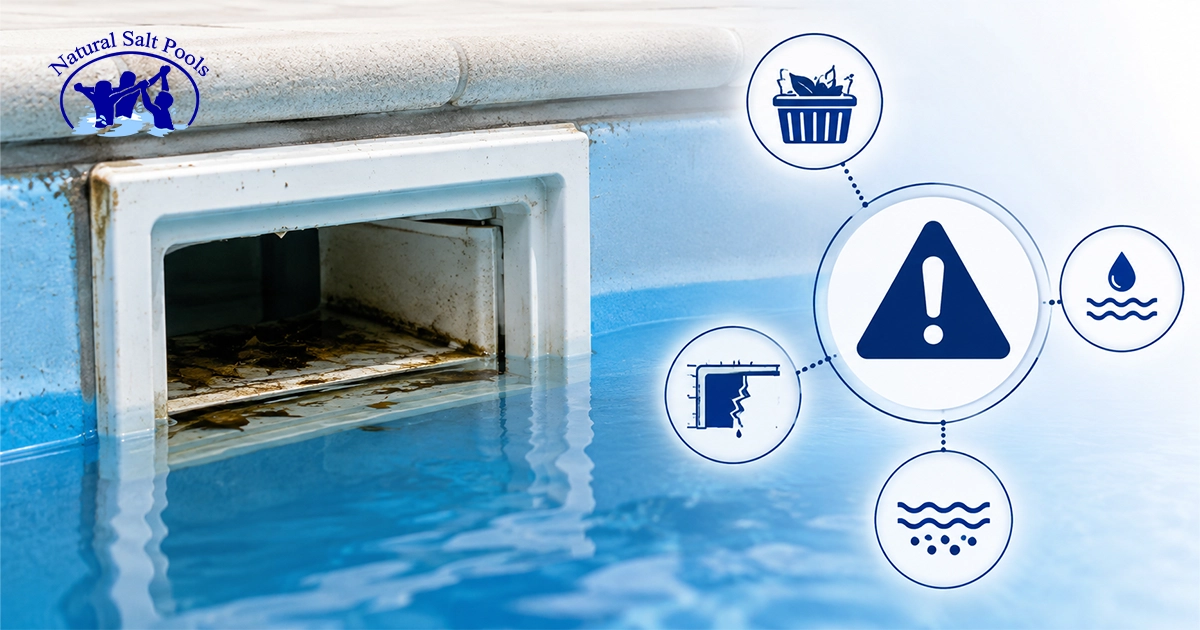
A few signs tend to show up before a skimmer problem turns into a bigger repair. These include water pooling or unusually soft ground near the skimmer, a noticeable drop in pool water level beyond normal evaporation, reduced water flow at the returns, and a skimmer door that no longer moves freely. Any of these are worth investigating before they lead to more significant equipment or structural damage.
DIY Fixes You Can Try First
Some pool skimmer problems can be addressed without calling in a professional. Adjusting the water level to the correct height, cleaning out the skimmer basket, and checking for visible debris blocking the suction line are all reasonable first steps. Inspecting the skimmer door for obvious damage or a stuck hinge is also worth doing before assuming a bigger issue is at play.
When to Call a Pool Skimmer Repair Service
If basic troubleshooting does not resolve the issue, or if you notice cracking, persistent water loss, or soft ground near the skimmer, it is time to bring in a pool skimmer repair service. A professional can pressure test the plumbing lines, inspect the skimmer housing for structural damage, and determine whether the issue is isolated to the skimmer or connected to a larger plumbing or pump problem.
Repair or Full Skimmer Replacement: How to Decide
Minor issues, such as a stuck door, a small leak at a fitting, or a cracked basket, are usually straightforward and inexpensive to repair. Full pool skimmer replacement tends to make more sense when the housing itself is cracked, when the skimmer is original equipment on an older pool and has become brittle, or when repeated repairs have not resolved ongoing leaks or suction problems. A skimmer replacement service can typically inspect the unit and advise whether patching the existing skimmer or installing a new one is the more cost effective path forward.
How to Prevent Future Pool Skimmer Problems
Regular maintenance goes a long way toward avoiding skimmer issues. Check and empty the basket regularly, especially during high debris seasons, monitor the water level consistently rather than letting it drift too high or low, and inspect the skimmer housing and door periodically for early signs of wear or cracking. Scheduling a seasonal equipment check with a pool professional can catch small issues before they turn into bigger, more expensive repairs.
FAQs
Why is my pool skimmer not working?
A pool skimmer that is not working is often caused by a low water level, a clogged basket or line, an air leak, or a stuck or broken skimmer door, and each of these has a different fix.
Can I fix a cracked pool skimmer myself?
Very small cracks can sometimes be sealed with pool grade epoxy, but larger cracks or damage to the skimmer housing usually require a professional repair or full replacement to prevent leaks and further damage.
How much water should be in the pool for the skimmer to work?
Water should generally sit at about the midpoint of the skimmer opening, since water that is too low prevents proper suction and water that is too high reduces the skimmer’s ability to pull in surface debris.
When should I replace a pool skimmer instead of repairing it?
Replacement is usually the better option when the skimmer housing is cracked, when it has needed multiple repairs, or when it is original equipment on an older pool that has become brittle or discolored over time.
Final Thoughts
Most pool skimmer problems start small: a slightly stuck door, a slower than usual basket fill, a little extra water loss. Left unchecked, those small issues can turn into cracked housings, structural damage, or bigger plumbing repairs. Paying attention to the early warning signs, trying a few basic fixes, and knowing when to bring in a professional will keep both the skimmer and the rest of the pool system running the way they should.
If your pool skimmer is not performing the way it used to, reach out for a pool skimmer repair service with Natural Salt Pools, or ask about skimmer replacement service options if it is time for a new one.
Leave a Reply